
Wild animals and the legacy of St. Francis
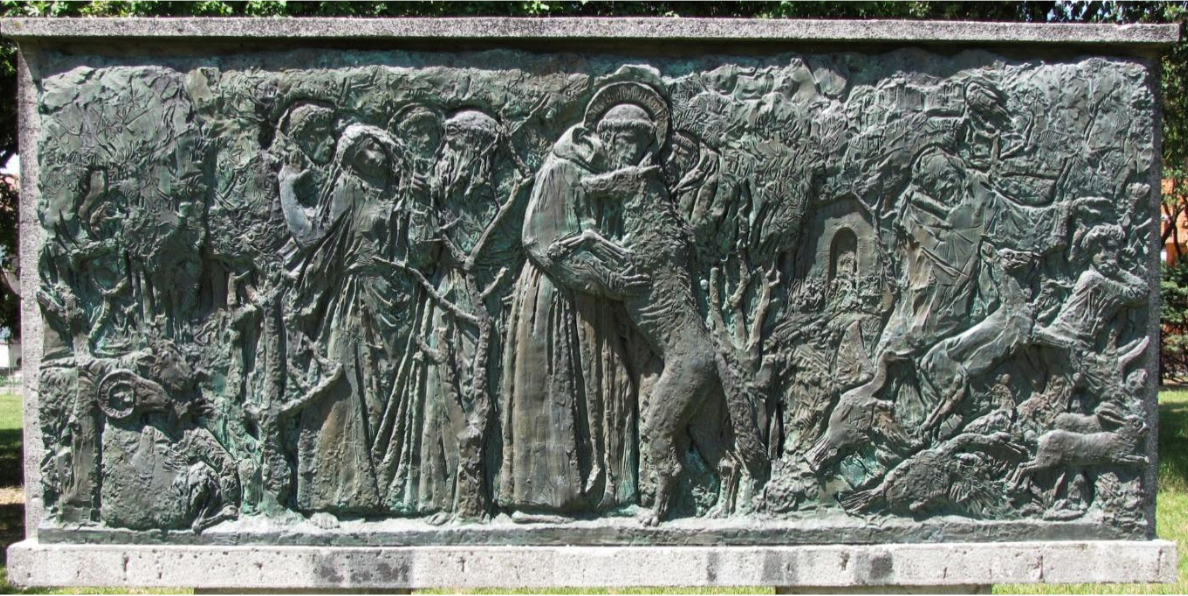
Once upon a time, there was a great city whose inhabitants were terrorised by an enormous wolf. Every night, howls would disturb them from their sleep, and hens, dogs, and people disappeared into the belly of the beast. Visitors to the great city dwindled and the streets became quiet. Parents held their children close, and locked their doors. Many of those who went to seek help were eaten, but one was quiet and quick, and managed to slip through. After several days travelling, he met a man in a rough brown cloak. Delirious with fear and sleeplessness, he fell at the man’s bare feet and begged him to help them. The man embraced him, and promised to do all he could. He listened carefully to the messenger’s story as they walked, but said nothing in response. When they drew close to the city, the watchers blew their horns, and curious crowds began to gather among the houses. But while the travellers were still on the road, a great growl made the earth tremble. Suddenly, a great grey creature bounded from among the trees toward them, its mouth gaping. The messenger fell back with a cry, watching families covered their eyes, and prepared for the screams sure to follow. But they did not come. The animal had stopped still, its great sides heaving, and its eyes fierce. The man knelt before the wolf, its hot breath on his face, and began to speak. “Oh my brother wolf! What has driven you to terrorise these poor animals and people? Don’t you know that all belong to God and that you hurt them without his permission? But come, there is a better way for you to be. From now on, these people will cease from their hunting, and instead provide you with the food you lack.” He offered his open hand. At this the wolf paused, still panting, and looked deeply into the man’s eyes. They stood there, two animals isolated from the surrounding crowd, for what seemed like an eternity, before the wolf bowed his head, and laid one of his great paws in the saint’s hand.
The story that I have adapted here from the Little Flowers of St. Francis is usually known as “The Wolf of Gubbio”. Gubbio is a city in Italy, and this tale is perhaps one of the most well-known stories of St. Francis’s animal miracles. He was a medieval monk and saint who was known especially for his commitment to poverty, and to tender care for the environment, including individual non-human animals. The Season of Creation – which runs throughout the month of September, and is celebrated by many churches – is due to end on his feast day: 4th October. On that day, the Anglican Society for the Welfare of Animals (ASWA) will also be hosting their annual service to celebrate – as St. Francis would put it – our brothers and sisters in the wider animal world.
Of course, it’s hard to know whether the events narrated in stories like this one actually took place. That said, the story of the Wolf of Gubbio is interesting both for its attestation – a tomb associated with the wolf in Gubbio was found to contain wolf bones in when it was opened in 1873 – but also for its resonance with scripture. We read in Isaiah’s vision of the new creation that “the wolf shall live with the lamb; the leopard shall lie down with the kid; the calf and the lion will feed together, and a little child shall lead them.” This is an image of two-way peace among animals: peace between prey and predator, and peace between non-human and human predator. Although the story might seem on its surface to address only the second of these (the agreement that St. Francis establishes is between the wolf and the residents of the town, after all), it’s important to note that Francis’s reproach is not just to condemn the wolf for harming humans, but also harming their non-human livestock. In this story, Francis embodies the coming of God’s new kingdom by being a peacemaker between the wolf and the townspeople, but also through his tender care for the vulnerable animals: both the companions of the people, and the wolf himself.
What can the story of St. Francis and the wolf say to us today? For most of us, the danger of wolf attack is much lower than in Francis’s day, as wolf populations have declined across Europe. However, the approach Francis takes to making peace with the wolf can still teach us some things about how we ought to approach wildlife of all kinds. One of the parts of the story that I find striking is the nature of the promises Francis makes. The townspeople are to not only cease from hunting the wolf, but also to provide food for him. That is, the people of the town are given a negative duty (to stop hunting) and a positive duty (to start feeding). Most of the time, when we talk about our duties to wild animals today, we think in negative terms. We ought to stop hunting them, we ought to stop destroying their habitat, we ought to stop harassing them for photos. But are we missing something here that Francis can help us to see?
There is still a perspective that our duties to farmed and companion animals are stronger or of a different order to those we have towards wild animals. A lot of people have a tendency to think that their pets matter as individuals, but that wild and farmed animals matter chiefly as representatives of a species. Species extinction is a real problem, but too often the interests of individual members of that species are side-lined to promote the good of the whole. Jesus warns us against this by noting that not a single one of these animals dies outside the care of the Father.
When I have conversations about actively helping wild animals with people, I often get mixed responses. Some people feel guilty: “Well, I know I oughtn’t feed the foxes in my garden, but I hate seeing them so skinny.” Others will grimace: “It’s much too dangerous to interfere with these natural processes, if ecosystems collapse, it will be much worse for them all!” But I think most people are sympathetic when it comes to helping an individual injured or hungry animal. Of course, as an ecologist myself, I am only too aware of the risks of naïve interventions in wild systems. Simple but subtly varying relationships between many individuals explode into unimaginable complexity when scaled up to ecosystems, and small interventions can have huge and wildly counterintuitive outcomes. But too often these real and important concerns have slammed the brakes on any research into these questions, instead of just promoting high levels of caution.
So can we safely help wild animals, beyond caring for the sick and injured? An increasing number of research organisations and charities are trying to answer this question. Charities like the Center for Wild Animal Welfare are working on easy measures we can take to make life better for wild animals now – for example, by advocating for the use of bird-safe glass to reduce collisions. Some research institutes are also tackling the problem of how we measure wild animal welfare. For example, the Jeremy Coller Centre is conducting research to understand how much animals suffer, and is focusing at the moment on invertebrates. The Wild Animal Initiative funds scientists doing research into how we can identify signs of stress in wild animals without harming them. The methods and data produced now will help cautiously inform future work.
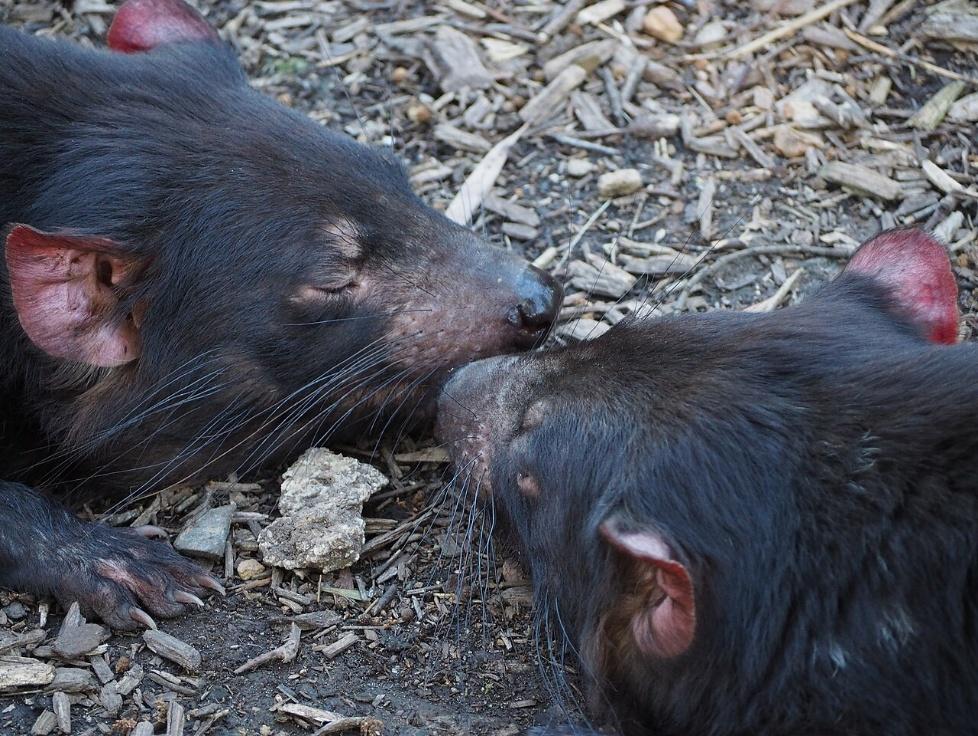
With deeper understanding, there is potential for us to be more ambitious than only caring for individual injured or sick animals. Many pests and diseases cause immense suffering in wild populations. The new world screwworm is a parasitic fly which has larvae that eat their host alive. In the 1950s – because of the damage it was doing to cattle herds – a concerted effort led to its eradication in North America. The same methods could be applied to help the innumerable wild animals that the fly also infects. On the other side of the globe, there is significant effort devoted to finding a vaccine for the tumours that lethally infect Tasmanian devils – an endangered species. I hope that one day we might go to similar efforts to help animals that are not endangered too.
I’m optimistic that with careful consideration, there is more we can do. I’m grateful that many scientists and policymakers are working to understand wild systems, and considering how we can help the animals that live in them. My hope is that we continue to move towards a world that Francis prophetically welcomed: one of peace between humans and our non-human brothers and sisters.

.jpg)